
Occupational Skills Programme: Eco-Ranger
Uncategorized
Wishlist Share

About Course

1. COURSE INTRODUCTION SECTION

1.1 Course Synopsis

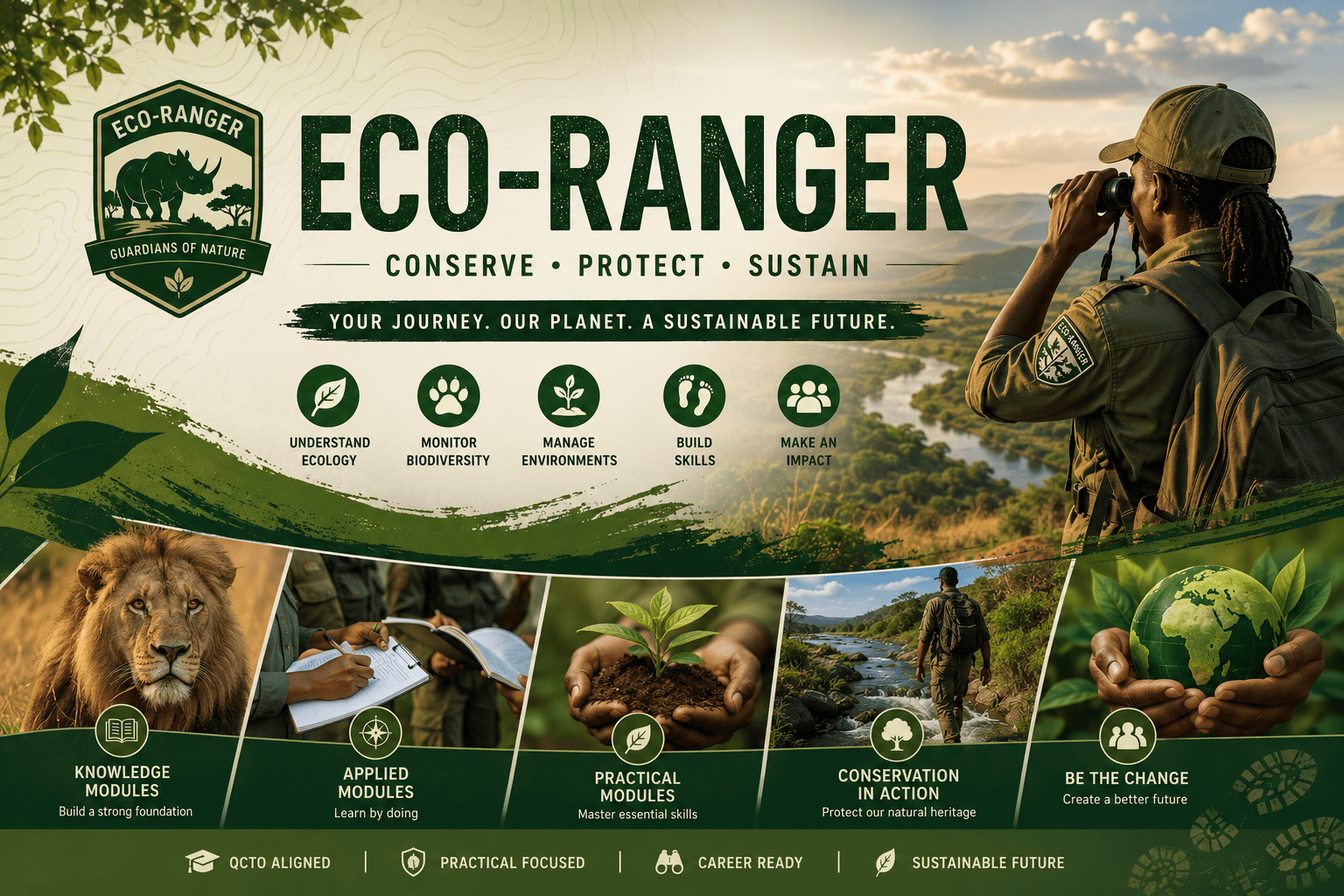
The Eco-Ranger Occupational Skills Programme prepares learners to support biodiversity conservation and the protection of natural resources, plants and animal species within and outside protected areas.

The programme introduces learners to the ecological principles, conservation practices, monitoring methods, legislation, navigation systems, communication tools and safety procedures required when working in wildlife and environmental conservation environments.

The programme is relevant to South Africa’s conservation, environmental management, wildlife protection and eco-tourism sectors. Eco-Rangers contribute to the monitoring of ecosystems, identification of environmental risks, protection of wildlife and responsible management of natural resources.

The course supports learners who want to enter or develop within conservation-related work, including opportunities in protected areas, nature reserves, environmental organisations, eco-tourism operations and community-based conservation projects.


1.2 About the Course

The Eco-Ranger programme provides learners with the theoretical knowledge and practical skills required to perform biodiversity monitoring and conservation-support activities.

Learners will study the relationships between living organisms and their environments, the functioning and resilience of ecosystems, African wildlife, conservation legislation, biodiversity monitoring, catchment systems, natural-resource management, navigation, radio communication and eco-tourism.

The theoretical component builds the learner’s understanding of:

  • Ecology and ecosystem functioning
  • Conservation principles
  • Wildlife identification and behaviour
  • Human and wildlife interactions
  • Conservation legislation and enforcement procedures
  • Biodiversity monitoring principles and methods
  • Invasive alien species
  • Catchment systems and natural resources
  • Maps, GPS, GIS and navigation
  • Two-way radio communication
  • Eco-tourism and biodiversity conservation
  • Personal safety and survival measures

The practical component allows learners to apply this knowledge through activities such as:

  • Conducting wildlife patrols
  • Preparing and using conservation tools and equipment
  • Implementing invasive alien species control activities
  • Collecting biodiversity, habitat and natural-resource data
  • Locating species and habitats using maps, GPS and GIS
  • Communicating field information using two-way radios
  • Responding to emergencies in wildlife environments
  • Compiling evidence of completed practical work

The programme aligns learning with the occupational responsibilities of an Eco-Ranger. Learners are prepared to monitor biodiversity, assist with field surveys, support wildlife protection, control invasive alien species, monitor natural resources and carry out conservation duties safely.


1.3 Course Overview

The course follows a structured learning pathway that combines knowledge development with practical application.

Learners begin by developing a basic understanding of ecology, ecosystems and conservation principles. They then progress to wildlife conservation, conservation legislation, personal safety, biodiversity monitoring and natural-resource management.

The programme later introduces navigation and communication systems, including maps, GPS, GIS and two-way radios. Learners also study the relationship between eco-tourism and biodiversity conservation.

Once the required theoretical knowledge has been developed, learners apply it through practical conservation activities. These activities include wildlife patrols, invasive alien species control, conservation data collection, GIS-based location activities, radio communication and emergency response.

The learning pathway progresses through the following stages:

  1. Understanding ecology and ecosystems
  2. Understanding wildlife and conservation
  3. Applying conservation legislation and procedures
  4. Recognising hazards and applying safety measures
  5. Monitoring biodiversity and environmental conditions
  6. Managing catchment areas and natural resources
  7. Using navigation and communication systems
  8. Understanding eco-tourism and biodiversity
  9. Applying knowledge through practical conservation activities
  10. Demonstrating competence through formative and summative assessments

The course is delivered through a combination of:

  • Facilitated theoretical learning
  • Individual and group learning activities
  • Case studies and conservation scenarios
  • Practical demonstrations
  • Simulated activities
  • Field-based or workplace activities
  • Formative assessments
  • Module summative assessments
  • Portfolio of Evidence activities

This combination allows learners to understand conservation concepts and demonstrate how those concepts are applied in real or simulated conservation environments. QCTO skills programmes are occupationally directed and place an emphasis on practical, simulated and workplace-related learning.


1.4 Learning Outcomes

After completing the Eco-Ranger programme, learners should be able to:

  • Apply ecological principles to the conservation of biological diversity.
  • Explain how ecosystems function and respond to environmental changes.
  • Explain the importance of ecosystem resilience in biodiversity conservation.
  • Identify selected African wildlife species and describe their behaviour.
  • Explain interactions between people, wildlife and conservation environments.
  • Apply wildlife conservation knowledge when supporting conservation activities.
  • Recognise threatened, endangered and vulnerable wildlife species.
  • Explain actions used to conserve threatened and endangered species.
  • Identify activities that may contravene conservation legislation.
  • Follow appropriate procedures when reporting illegal conservation-related activities.
  • Apply self-protection and survival measures during emergency situations.
  • Explain the purpose and principles of biodiversity monitoring.
  • Conduct basic biodiversity monitoring activities.
  • Identify and report changes affecting species, habitats and natural resources.
  • Identify invasive alien species and explain their environmental impact.
  • Assist with the implementation of an approved invasive alien species control programme.
  • Explain the role of catchment systems in biodiversity conservation.
  • Monitor catchment areas and natural resources.
  • Contribute to the rehabilitation and restoration of affected natural resources.
  • Read and interpret maps used in conservation environments.
  • Use GPS and basic GIS applications to locate species, habitats and natural resources.
  • Use two-way radio communication systems according to operational procedures.
  • Explain how eco-tourism can support biodiversity conservation.
  • Use appropriate tools and equipment when conducting wildlife patrols.
  • Collect and record biodiversity, habitat and natural-resource data.
  • Submit collected field data to the responsible person.
  • Respond appropriately to emergencies in wildlife conservation environments.
  • Maintain personal safety and contribute to the safety of others and wildlife during conservation activities.

1.5 Target Audience

The Eco-Ranger programme is suitable for:

  • School leavers and matriculants interested in conservation and environmental sustainability
  • Aspiring Eco-Rangers
  • Entry-level conservation workers
  • Community members involved in conservation initiatives
  • Individuals involved in community-based natural-resource management
  • Rural farmers who want to improve their understanding of conservation and environmental management
  • Field Rangers who want to expand their biodiversity-monitoring skills
  • Environmental monitors
  • Eco-tourism employees
  • Individuals already working in conservation or environmental management
  • Learners who want to pursue further education or employment in the conservation sector

1.6 Course Requirements

Entry Requirements

Learners must meet one of the following entry requirements:

  • An NQF Level 3 qualification with Mathematics or Mathematical Literacy; or
  • A minimum of two years of experience in the wildlife conservation sector.

Learning Requirements

Learners should also be prepared to:

  • Participate in theoretical and practical learning activities.
  • Work individually and as part of a conservation team.
  • Participate in simulated or field-based conservation activities.
  • Follow health, safety and environmental procedures.
  • Use conservation tools and equipment under supervision.
  • Complete formative and summative assessments.
  • Compile and maintain a Portfolio of Evidence.
  • Record practical activities accurately.
  • Follow the instructions of facilitators, assessors, mentors and workplace supervisors.

Where practical activities are conducted, learners will require supervised access to the relevant conservation environment, tools, equipment and technology. This may include maps, GPS devices, GIS software, two-way radios, data-collection tools and personal protective equipment.


1.7 Skills You’ll Gain

By completing this course, learners will develop skills in:

  • Ecological observation
  • Biodiversity monitoring
  • Wildlife identification
  • Wildlife behaviour observation
  • Conservation law awareness
  • Recognition and reporting of illegal activities
  • Wildlife patrol procedures
  • Invasive alien species control
  • Environmental data collection
  • Field-record completion
  • Habitat monitoring
  • Natural-resource monitoring
  • Catchment-area monitoring
  • Map reading
  • GPS navigation
  • Basic GIS application
  • Two-way radio communication
  • Eco-tourism awareness
  • Conservation tool and equipment preparation
  • Personal safety and self-protection
  • Emergency response
  • Risk identification
  • Problem-solving
  • Teamwork
  • Field communication
  • Environmental responsibility
  • Portfolio of Evidence compilation

1.8 Course Structure

The Eco-Ranger programme consists of eight Knowledge Modules and five Practical Modules.

Knowledge Modules

Module Module Title Type NQF Level Credits
KM-01 Ecological Principles and Ecosystem Resilience Knowledge 3 3
KM-02 Wildlife Conservation Knowledge 4 3
KM-03 Nature Conservation Law and Enforcement Knowledge 4 3
KM-04 Self-Protection and Survival Measures Knowledge 4 3
KM-05 Biodiversity Monitoring Knowledge 4 8
KM-06 Catchment Areas and Natural Resources Management Knowledge 4 5
KM-07 Navigation and Communications Knowledge 3 5
KM-08 Eco-Tourism and Biodiversity Knowledge 4 6
  Knowledge Module Total     36

Practical Modules

Module Module Title Type NQF Level Credits
PM-01 Wildlife Patrols Practical 4 5
PM-02 Invasive Alien Species Control Practical 4 2
PM-03 Conservation Data Collection Practical 4 5
PM-04 GIS and Two-Way Radio Communication Practical 4 5
PM-05 Self-Protection Practical 4 7
  Practical Module Total     24

Programme Credit Summary

Component Credits
Knowledge Modules 36
Practical Modules 24
Total Programme Credits 60


Show More

Course Content

KM-01: Ecological Principles and Ecosystem Resilience
This module introduces learners to the ecological principles that support the conservation of biological diversity. Learners will explore ecology and its development, indigenous ecological knowledge, the relationships between living and non-living components of ecosystems, biological diversity, ecosystem complexity and ecosystem resilience. The module also examines how environmental changes, including climate change, affect ecosystems and the species that depend on them. This foundational knowledge prepares learners for later modules involving wildlife conservation, biodiversity monitoring and the sustainable management of natural resources, while supporting the overall programme outcome of contributing to effective biodiversity conservation.

KM-02: Wildlife Conservation
Wildlife forms an essential part of healthy ecosystems and plays a critical role in maintaining biodiversity and ecological balance. Conserving wildlife is not only about protecting individual species, but also about safeguarding the habitats, ecological processes, and natural systems that support life on Earth. This module introduces learners to the principles of wildlife conservation within an African context. It explores the diversity of African wildlife, the characteristics and behaviour of different animal groups, the relationship between people and wildlife, wildlife tracking and movement, and the importance of protecting threatened and endangered species. Learners will also examine the role of wildlife conservation in supporting sustainable development, maintaining ecosystem stability, and preserving South Africa's rich natural heritage. By understanding the challenges facing wildlife and the measures used to address them, Eco-Rangers will be better prepared to contribute to responsible conservation and biodiversity protection

KM-03: Nature Conservation Law and Enforcement
Nature conservation depends not only on scientific knowledge and responsible environmental management, but also on legislation that protects biodiversity, natural resources and wildlife. Conservation laws establish the legal framework that guides how protected areas are managed, how wildlife is conserved, and how environmental offences are prevented and addressed. This module introduces learners to the legal principles that support biodiversity conservation in South Africa. Learners will develop an understanding of conservation legislation, regulations, provincial ordinances, municipal by-laws and the enforcement procedures used to protect wildlife and natural ecosystems. The module also explains the role of conservation officials, law enforcement agencies and environmental authorities in ensuring compliance with environmental legislation. By understanding the legal responsibilities associated with conservation, Eco-Rangers will be better equipped to support lawful environmental management, protect biodiversity and contribute to the sustainable use of natural resources

KM-04: Self-Protection and Survival Measures
Working within wildlife conservation environments often exposes Eco-Rangers to challenging and unpredictable situations. These may include encounters with dangerous wildlife, extreme weather conditions, difficult terrain, injuries, fires, floods and other emergencies. Being able to recognise potential hazards and respond appropriately is essential for maintaining personal safety while protecting colleagues, visitors and wildlife. This module introduces learners to the principles of self-protection and survival within a conservation context. Learners will develop an understanding of emergency situations, protective actions for life safety, emergency procedures and basic survival techniques that support safe operations in the field. By understanding how to identify emergencies, respond appropriately and apply fundamental survival principles, Eco-Rangers will be better prepared to work safely and responsibly within protected areas and other natural environments

KM-05: Biodiversity Monitoring
Biodiversity monitoring is one of the most important activities in environmental conservation. It provides the information needed to understand the condition of ecosystems, monitor wildlife populations, assess habitats and identify environmental changes that may threaten biodiversity. This module introduces learners to the principles and importance of biodiversity monitoring within a conservation context. Learners will explore methods used to measure biodiversity, conduct biodiversity assessments, monitor species and habitats, and identify invasive alien species and their impacts on ecosystems. The module also examines monitoring actions that support conservation decision-making and sustainable environmental management. By understanding how biodiversity is monitored and why accurate environmental information is essential, Eco-Rangers will be better equipped to contribute to biodiversity conservation, habitat management and the long-term protection of South Africa's natural resources.

KM-06: Catchment Areas and Natural Resources Management
Healthy catchment areas and well-managed natural resources are essential for maintaining biodiversity, supporting ecosystems and ensuring the long-term availability of water, soil, vegetation and wildlife habitats. The condition of a catchment directly influences the health of rivers, wetlands, forests, grasslands and the many species that depend on them. This module introduces learners to the importance of catchment systems in biodiversity conservation and explains how natural resources should be managed responsibly. Learners will examine the role of catchment assessments, catchment improvement initiatives, natural resource conservation, ecological rehabilitation and ecosystem restoration in supporting healthy environments. The module also explores how conservation organisations restore degraded ecosystems and manage natural resources sustainably to improve ecosystem resilience and biodiversity. By understanding these principles, Eco-Rangers will be better prepared to contribute to environmental protection, habitat restoration and the sustainable management of South Africa's natural resources.

KM-07: Navigation and Communications
Navigation and communication are essential skills for Eco-Rangers working in protected areas and other conservation environments. Accurate navigation enables conservation personnel to locate wildlife, habitats and natural resources efficiently, while effective communication supports teamwork, safety and coordinated conservation operations. This module introduces learners to the principles of navigation systems used in biodiversity conservation, including Geographic Information Systems (GIS), Global Positioning Systems (GPS) and map-based navigation. Learners will also develop an understanding of two-way radio communication systems, their components and their role in supporting field operations. By understanding how navigation technologies and communication systems support conservation work, Eco-Rangers will be better equipped to locate species, monitor biodiversity, navigate safely within conservation areas and communicate effectively during environmental management activities.

KM-08: Eco-Tourism and Biodiversity
Eco-tourism promotes responsible travel to natural areas while supporting biodiversity conservation, environmental education and sustainable community development. When managed responsibly, eco-tourism creates opportunities to protect wildlife and natural habitats while providing economic and social benefits to local communities. This module introduces learners to the principles of eco-tourism and its relationship with biodiversity conservation. Learners will explore different forms of eco-tourism, consumptive and non-consumptive tourism, the role of eco-tourism in the safari industry and the contribution of responsible tourism to sustainable environmental management. The module also examines how eco-tourism businesses support conservation initiatives and how responsible tourism contributes to protecting South Africa's rich natural heritage. By understanding these principles, Eco-Rangers will be better equipped to support conservation activities while promoting environmentally responsible tourism.

AM-01: Wildlife Patrols
Wildlife patrols are one of the primary responsibilities of an Eco-Ranger. Regular patrols help protect biodiversity, monitor wildlife populations, identify environmental threats and support the sustainable management of protected areas. Through effective patrols, Eco-Rangers contribute to safeguarding natural resources while ensuring that conservation areas remain healthy and well managed. This Applied Practical Module provides learners with supervised practical experience in planning and conducting wildlife patrols within conservation environments. Learners will apply the knowledge gained during the Knowledge Modules by carrying out field observations, monitoring biodiversity, identifying environmental concerns and following organisational procedures during routine patrol activities. The practical activities in this module are designed to develop competence in field observation, environmental awareness, navigation, communication, record keeping and professional conduct. By successfully completing this module, learners will demonstrate the practical skills required to participate safely and effectively in wildlife patrol operations while supporting biodiversity conservation and protected area management.

AM-02: Invasive Alien Species Control
Invasive alien species (IAS) pose a significant threat to biodiversity by competing with indigenous species, altering ecosystems and reducing the availability of natural resources. Effective control programmes are essential for protecting ecosystems and maintaining healthy biodiversity. This Applied Practical Module provides learners with the opportunity to apply invasive alien species control procedures within an operational environment. Learners will participate in planning, preparing and implementing approved invasive alien species control activities while using appropriate tools, equipment and materials. Through practical application, learners will develop the competence required to support invasive alien species management programmes safely, responsibly and in accordance with approved conservation procedures.

AM-03: Conservation Data Collection
Conservation decisions depend on reliable environmental information. Accurate data collection enables conservation organisations to monitor biodiversity, assess habitats, evaluate ecosystem health and make informed decisions that support sustainable environmental management. This Applied Practical Module provides learners with the opportunity to collect, record and submit biodiversity, species habitat and natural resource data within an operational conservation environment. Learners will apply approved data collection procedures, use appropriate tools and equipment, and submit information according to organisational requirements. Successful completion of this practical module demonstrates the learner's ability to collect accurate conservation data that contributes to biodiversity monitoring and environmental management.

AM-04: GIS and Two-Way Radio Communication
Geographic Information Systems (GIS) and two-way radio communication are essential operational tools used by Eco-Rangers during biodiversity conservation activities. GIS enables conservation personnel to locate species, habitats and natural resources accurately, while two-way radio communication supports coordination, safety and effective communication during field operations. This Applied Practical Module provides learners with practical experience in using GIS for species tracking and habitat mapping, as well as using two-way radio communication systems to report field observations and operational incidents. Learners will apply these technologies within simulated conservation scenarios while following approved organisational procedures. Successful completion of this module demonstrates the learner's ability to use navigation and communication technologies to support biodiversity conservation and protected area management.

AM-05: Self-Protection
Working in protected areas exposes Eco-Rangers to a variety of operational hazards, including wildlife encounters, difficult terrain, environmental conditions and emergency situations. Maintaining personal safety while protecting biodiversity is therefore an essential responsibility during all conservation activities. This Applied Practical Module provides learners with the opportunity to apply emergency response procedures, maintain personal safety and use appropriate tools, equipment and materials during simulated emergency situations. Learners will demonstrate their ability to respond safely and professionally while following approved organisational procedures. Successful completion of this module demonstrates the learner's ability to prepare for emergencies, protect themselves and others, and respond appropriately during conservation operations.

Earn a certificate

Add this certificate to your resume to demonstrate your skills & increase your chances of getting noticed.

selected template

Student Ratings & Reviews

No Review Yet
No Review Yet

Want to receive push notifications for all major on-site activities?

✕
Scroll to Top