
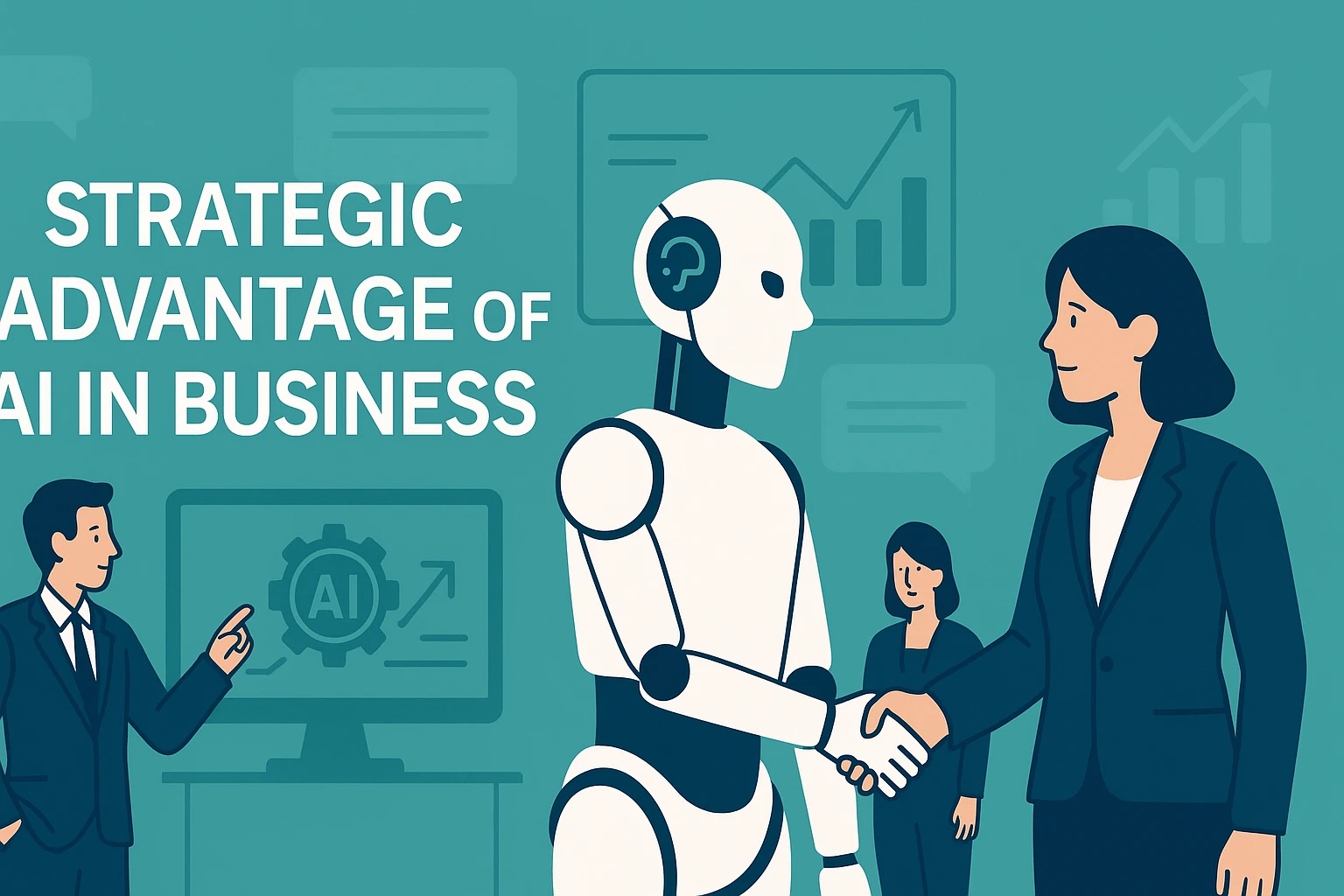
Lesson 3: Strategic Advantage of AI in Business
Artificial Intelligence is transforming industries and changing how organisations operate.
In this lesson, you will learn how AI contributes to the growth, efficiency, and competitive advantage of businesses worldwide.
⭐ 1. AI in the Fourth Industrial Revolution (4IR)
4IR is a period where physical, digital, and biological systems merge.
AI plays a central role by powering technologies such as:
- Automation
- Robotics
- Cloud computing
- Big data analytics
- Cybersecurity
- Machine learning
AI helps companies operate faster, smarter, and more efficiently.
⭐ 2. Benefits of AI in Business
✔ a) Improved Decision-Making
AI analyses massive amounts of data and provides insights humans may miss.
Examples: fraud detection, customer insights, risk prediction.
✔ b) Increased Efficiency & Automation
AI automates repetitive tasks, reducing human error.
Examples: chatbots, automated emails, inventory tracking.
✔ c) Cost Reduction
AI-driven automation reduces operational costs and speeds up processes.
✔ d) Better Customer Experience
Examples: personalised recommendations, AI chat support, prediction of customer behaviour.
✔ e) Faster Problem-Solving
AI systems can detect problems early and suggest solutions.
Examples: network monitoring, equipment failure prediction.
⭐ 3. AI in Different Industries
✔ Agriculture
- Soil analysis
- Crop monitoring
- Smart irrigation
- Pest prediction
✔ Healthcare
- Disease detection
- X-ray interpretation
- Patient monitoring
- Drug discovery
✔ Finance
- Fraud detection
- Credit scoring
- Algorithmic trading
- Risk analysis
✔ Manufacturing
- Robotics
- Quality control
- Predictive maintenance
- Supply chain optimisation
✔ Retail & E-commerce
- Product recommendations
- Dynamic pricing
- Customer behaviour analysis
- Stock management
✔ Education
- Adaptive learning tools
- Student performance prediction
- AI tutors
- Automated grading systems
⭐ 4. Challenges and Risks of AI in Business
Even with advantages, businesses must address issues such as:
- Data privacy
- High implementation costs
- Bias and fairness in AI systems
- Skills shortages
- Over-reliance on automated processes
Understanding these risks helps organisations implement AI responsibly.
🎯 Lesson Summary
By the end of this lesson, learners should be able to:
- Explain how AI contributes to 4IR
- Describe key advantages of AI in business
- Identify AI applications across major industries
- Recognise the challenges and risks associated with business AI