
Assessment Practitioner
About Course
About the Course
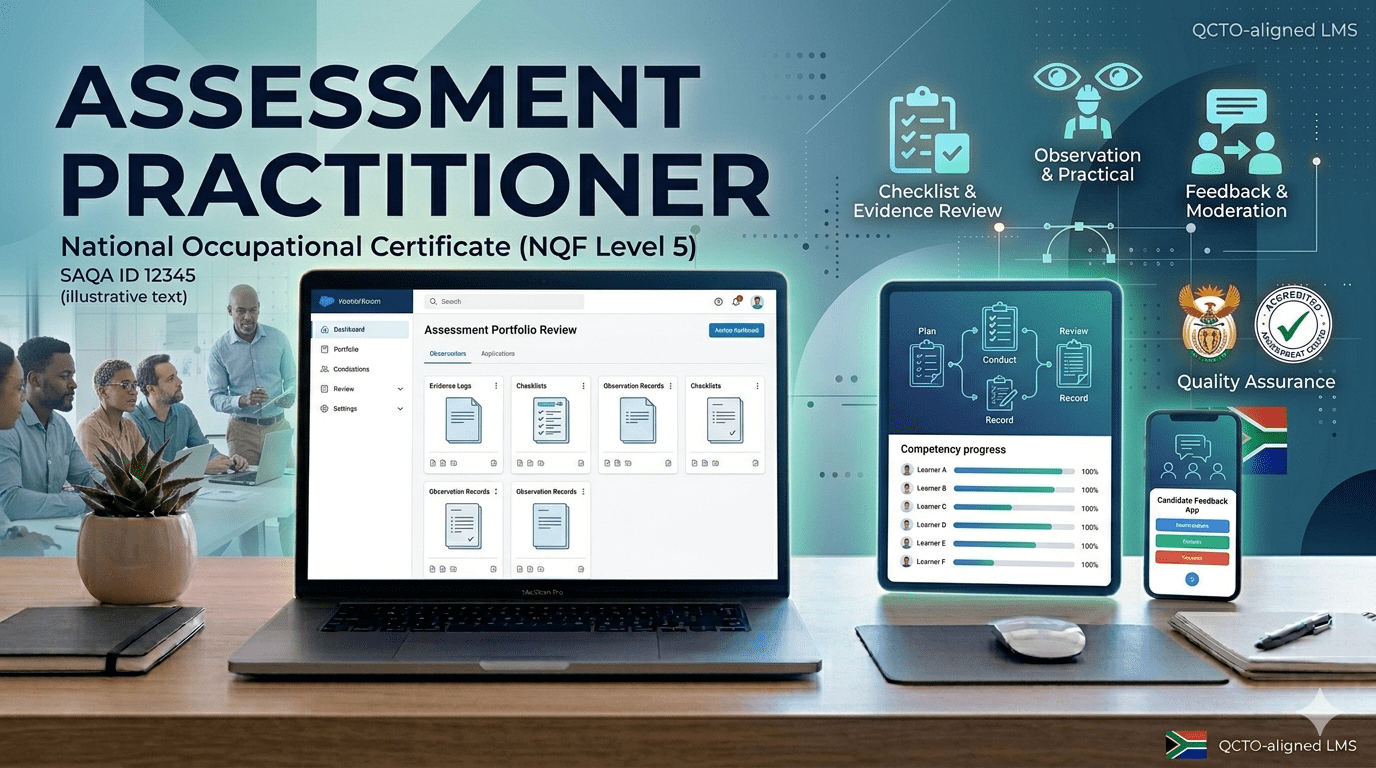
The Assessment Practitioner Skills Programme equips learners with the knowledge and practical skills required to plan, conduct, record, and review assessments in an occupational learning environment. The course focuses on assessment principles, evidence collection, learner competence evaluation, and assessment administration within the South African QCTO framework.
Learners will develop the ability to conduct fair, valid, reliable, and transparent assessments while supporting learner development through constructive feedback and effective assessment practices. The programme also introduces Recognition of Prior Learning (RPL), evidence evaluation methods, moderation principles, and assessment documentation processes.
This programme is ideal for individuals involved in training, workplace learning, skills development, or quality assurance who need to assess learner competence in line with occupational standards and national certification requirements.
The course combines theoretical learning with practical workplace-based assessment activities to ensure learners can confidently apply assessment practices in real-world environments.
Who This Course Is For
This course is designed for:
-
Trainers and facilitators involved in occupational learning programmes.
-
Workplace coaches and mentors supporting learner development.
-
Supervisors responsible for evaluating staff performance and competence.
-
Skills Development Facilitators (SDFs) and Learning & Development practitioners.
-
Individuals pursuing a career as an Assessment Practitioner.
-
Human Resource practitioners involved in training and development.
-
Professionals responsible for workplace assessments and learner feedback.
-
Individuals seeking QCTO-aligned assessor competencies.
-
Candidates preparing to conduct assessments within accredited training environments.
Learning Outcomes
After completing this course, learners will be able to:
-
Explain assessment principles, methods, and concepts used in occupational learning environments.
-
Apply principles of fair, valid, reliable, and transparent assessment practices.
-
Collect, evaluate, and record assessment evidence according to QCTO requirements.
-
Prepare and conduct learner assessments using appropriate assessment tools and methods.
-
Assess competence across practical, foundational, and reflexive dimensions.
-
Provide constructive assessment feedback and recommend remedial actions where necessary.
-
Complete assessment reports and maintain assessment records professionally and accurately.
-
Identify barriers to fair assessment and implement appropriate support measures.
-
Apply Recognition of Prior Learning (RPL) principles and practices.
-
Conduct assessments in compliance with quality assurance and regulatory requirements.
-
Review assessment decisions and improve assessment practices through reflection and evaluation.
Entry Requirements
To enrol in this course, learners should meet the following minimum requirements:
-
NQF Level 4 qualification or equivalent.
-
Communication skills at NQF Level 4.
-
Basic understanding of workplace learning or training environments.
-
Access to a workplace or simulated environment for practical assessment activities.
-
Ability to read, interpret, and complete assessment documentation.
Course Structure
This course is divided into Knowledge Modules (KM) and Practical Modules (PM).
Knowledge Module
KM-05: Assessment Practices and Principles
KT01: Assessment Practices, Methods and Concepts
-
Assessment practices
-
Assessment methods
-
QCTO assessment concepts
-
Principles of good assessment practice
-
Assessment theories
-
Types of assessment
-
Recognition of Prior Learning (RPL)
-
Domains of competence
KT02: Evidence Collection and Recording Concepts and Principles
-
Sources of evidence
-
Evidence collection instruments
-
Evidence collection tools
-
Principles of evidence collection and submission
KT03: Evidence Evaluation Concepts and Principles
-
Evidence evaluation methods
-
Competence judgement principles
-
Evaluation of assessment evidence
-
Assessment decision-making processes
KT04: Assessment Administration and Regulatory Practices
-
Assessment administration procedures
-
Assessment documentation
-
Regulatory and quality assurance requirements
-
Assessment reporting and record management
Practical Module
PM-06: Plan and Conduct the Assessment of Learner Competencies
PS01: Prepare for Assessment
-
Confirm assessment parameters
-
Assess learner readiness
-
Identify barriers to fair assessment
-
Prepare assessment resources and documentation
PS02: Conduct the Assessment
-
Engage candidates fairly and professionally
-
Collect and record evidence
-
Assess competence against standards
-
Make competence decisions
PS03: Report and Record Assessments
-
Draft assessment feedback reports
-
Provide constructive learner feedback
-
Agree on remedial actions
-
Record assessment outcomes
PS04: Review Assessments
-
Review assessment decisions
-
Evaluate assessment effectiveness
-
Reflect on assessment practices
-
Recommend improvements to assessment processes
Course Content
KM-05: Assessment Practices and Principles
PM-06: Plan and Conduct the Assessment of Learner Competencies
Earn a certificate
Add this certificate to your resume to demonstrate your skills & increase your chances of getting noticed.
Student Ratings & Reviews