
Fundamentals of Robotics
About Course
Course Title
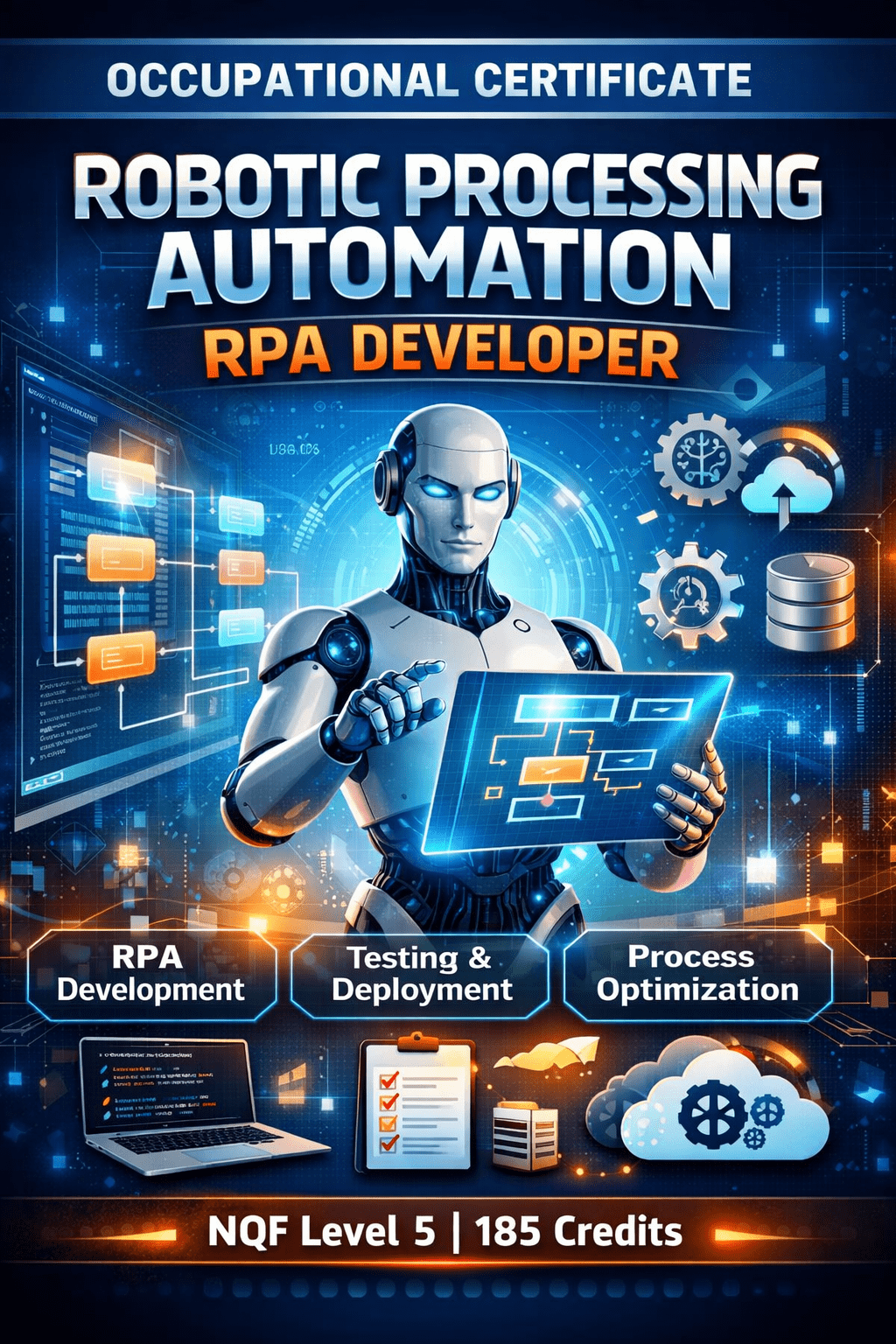
Occupational Certificate: Robotic Processing Automation (RPA) Developer
Course Description
This qualification is designed to prepare learners to operate as a Robotic Processing Automation (RPA) Developer, aligned to the occupation of Software Developer (251201)
The RPA Developer works collaboratively with developers and solution architects to design and develop robotic process automation software that emulates business processes defined by process owners and documented by business analysts. These solutions automate tasks that interact with multiple systems and data sources, improving efficiency and accuracy in business operations
The qualification focuses on enabling learners to:
- Develop RPA solutions that simulate human actions using platform knowledge and data analysis capabilities
- Execute testing procedures to evaluate system performance and determine whether solutions meet requirements
- Modify and improve existing RPA solutions and build reusable automation components
- Work effectively within multidisciplinary teams while adhering to ethical and professional standards
Qualification Details
-
Curriculum Code: 251201004
-
NQF Level: 5
-
Total Credits: 185
Course Structure
This qualification is made up of three integrated components:
1. Knowledge Modules (Total: 47 Credits)
These modules provide theoretical understanding of computing, data, and automation:
- KM-01: Overview of Robotic Process Automation (Credits: 2)
- KM-02: Basic Calculations and Logical Thinking Revision (Credits: 4)
- KM-03: Computers and Computing Systems (Credits: 3)
- KM-04: Computing Theory (Credits: 4)
- KM-05: Data, Databases and Data Scraping (Credits: 4)
- KM-06: Introduction to RPA for Automation of Processes (Credits: 12)
- KM-07: Robotic Process Automation (RPA) (Credits: 12)
- KM-08: Introduction to RPA Governance, Legislation and Ethics (Credits: 1)
- KM-09: Fundamentals of Design Thinking and Innovation (Credits: 1)
- KM-10: 4IR and Future Skills (Credits: 4)
2. Practical Skills Modules (Total: 66 Credits)
These modules focus on hands-on application of RPA development:
- Basic programming and calculations
- Data analysis and visualization using tools
- Development of robotic automated process solutions
- Testing, deployment, and maintenance of RPA systems
- Application of design thinking methodologies
3. Work Experience Modules
Learners gain real-world experience in:
- RPA solution design and development
- Testing and performance evaluation
- Deployment, troubleshooting, and continuous improvement of automation systems
Purpose of the Course
The course equips learners with the ability to:
- Analyse business processes and design automation solutions
- Develop and implement RPA workflows
- Test and optimise automation systems
- Maintain and improve deployed solutions
- Collaborate effectively within a professional environment
It ensures that learners can function both independently and as part of a team, applying efficiency, ethical conduct, and problem-solving skills in real workplace environments
Overall Learning Outcome
By completing this qualification, learners will be able to:
✔ Build intelligent automation systems
✔ Improve organisational efficiency through RPA
✔ Work with multiple technologies and platforms
✔ Apply best practices in software development and automation
✔ Contribute to digital transformation in modern organisations
Course Content
KM-01: Overview of Robotic Process Automation
KM-02: Basic Calculations and Logical Thinking Revision
KM-03: Computers and Computing Systems
KM-04: Computing Theory
KM-05: Data, Databases and Data Scraping
KM-06: Introduction to RPA for Automation of Processes
KM-07: Robotic Process Automation (RPA)
KM-08: Introduction to RPA Governance, Legislation and Ethics
KM-09: Fundamentals of Design Thinking and Innovation
KM-10: 4IR and Future Skills
Practical Module 1: Title Basic Calculations for Programming
Practical Module 2: Basic Programming
Practical Module 3: Access, Analyse and Visualise Structured Data using Spreadsheets and Scraping Tools
Practical Module 4: Model and Develop Robotic Automated Process (RPA) Solutions
Practical Module 5: Execute Test Procedures for Evaluating the RPA Solution Performance
Practical Module 6: Deploy RPA Solutions which Emulate Actions of a Human Interacting within Digital Systems
Practical Module 7: Modify and Improve Existing RPA Solutions
Practical Module 8: Function Ethically and Effectively as a Member of a Multidisciplinary Team
Practical Module 9: Apply Design Thinking Methodologies
Workplace Module 1: Function Ethically and Effectively as a Member of a Multidisciplinary Team
Workplace Module 2: Apply Design Thinking Methodologies
Earn a certificate
Add this certificate to your resume to demonstrate your skills & increase your chances of getting noticed.
Student Ratings & Reviews
