📘Lesson Summary:
This lesson introduces the concept of reverse logistics, the different types of returns, the returns processing cycle, inspection and disposition methods, recycling and disposal processes, and the importance of reverse logistics in supply chain performance.
Lesson 1: Understanding Reverse Logistics & Returns Processes (KM-09)
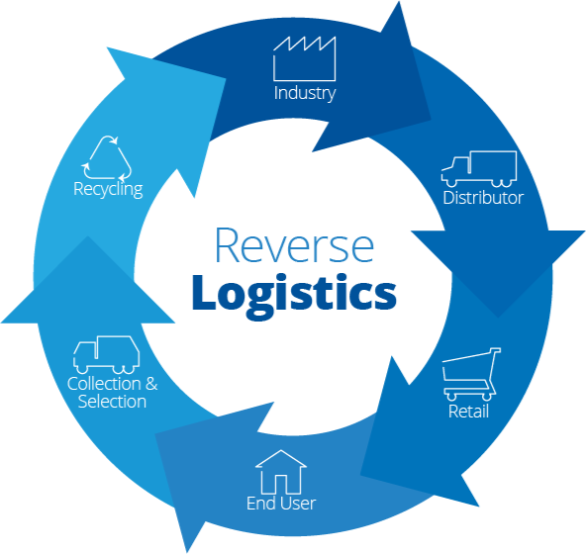
Reverse logistics refers to the movement of goods from the customer back to the manufacturer, supplier, or distribution centre. This includes returns, repairs, recalls, recycling, repackaging, and proper disposal.
Reverse logistics plays a major role in customer satisfaction, quality control, cost recovery, and environmental responsibility.
⭐ 1. Purpose of Reverse Logistics
Reverse logistics aims to:
- Manage returns efficiently
- Recover value from returned goods
- Reduce waste
- Ensure safe disposal of hazardous goods
- Improve customer trust and service
- Support sustainability goals
A well-managed reverse logistics system reduces costs and strengthens the brand.
⭐ 2. Types of Returns
Returns fall into several categories:
2.1 Customer Returns
Due to incorrect products, damages, defects, or dissatisfaction.
2.2 Warranty Returns
Products returned for repair or replacement under warranty.
2.3 Recall Returns
Products recalled due to safety or quality issues.
2.4 End-of-Life Returns
Products returned for recycling or disposal.
2.5 Commercial Returns
Unsold retail stock returned to suppliers.
Understanding the reason for return determines how it should be processed.
⭐ 3. The Reverse Logistics Process
The returns cycle includes:
3.1 Return Authorisation
Customer requests approval to return a product (e.g., RMA number).
3.2 Collection or Customer Drop-Off
Product is collected or delivered to a return point.
3.3 Receiving & Inspection
Goods are inspected to determine their condition.
3.4 Sorting & Disposition
Returned goods are classified as:
- Resellable
- Repairable
- Refurbishable
- Recyclable
- Return to supplier
- Waste
3.5 Processing
Actions include repairs, repackaging, refurbishing, or scrapping.
3.6 Reintroduction to Inventory or Disposal
Goods that can be resold are added back into stock; unusable goods are disposed of.
⭐ 4. Reasons for Returns & Impact on the Supply Chain
Common reasons:
- Wrong product shipped
- Damaged in transit
- Poor product quality
- Incorrect size/specification
- Customer changed their mind
- Expired stock
Impact on supply chain:
- Increased costs
- Inventory imbalances
- Additional handling
- Customer dissatisfaction
- Waste generation
⭐ 5. Value Recovery Options
Reverse logistics focuses on recovering value whenever possible:
- Refurbishing
- Repairing
- Reselling
- Recycling materials
- Spare parts recovery
This supports circular economy principles.
⭐ 6. Reverse Logistics Documentation
Key documents:
- Return Authorisation (RMA)
- Return Note
- Inspection Report
- Repair/Service Report
- Disposal Certificate
These ensure accurate tracking and compliance.
⭐ 7. Risks in Reverse Logistics
Risks include:
- Fraudulent returns
- Incorrect inspection
- Health and safety issues (hazardous goods)
- Environmental non-compliance
- High processing costs
Risk control measures:
- Clear return policies
- Quality checks
- Secure handling
- Documentation accuracy
- Staff training
⭐ 8. Technology in Reverse Logistics
Technology improves visibility and speed:
- Barcode and RFID tracking
- Online returns portals
- Automated return authorisation systems
- Repair tracking systems
- Recycling and waste management software
⭐ 9. Environmental & Compliance Requirements
Reverse logistics must comply with:
- Waste disposal regulations
- Hazardous goods handling
- Packaging recycling requirements
- Environmental sustainability standards
This supports legal compliance and corporate responsibility.
🎯 Lesson Outcomes
By the end of this lesson, learners will be able to:
- Define reverse logistics and explain its purpose.
- Describe types of returns and reasons for return.
- Outline the reverse logistics process.
- Evaluate value recovery options.
- Understand documentation requirements.
- Identify risks and mitigation methods.
- Explain technology used in reverse logistics.
- Apply reverse logistics principles to real workplace scenarios.