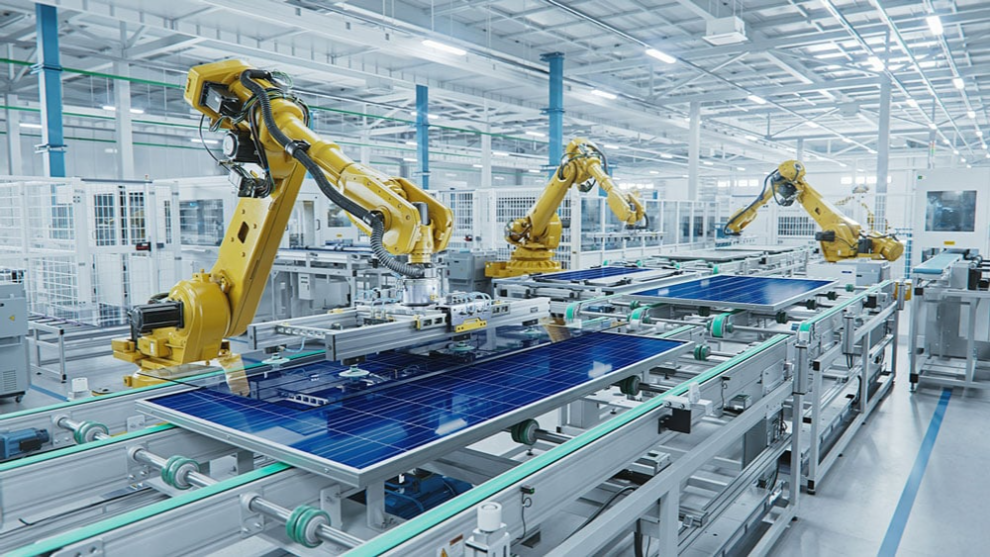
📘Lesson Summary:
This lesson explains the principles of production operations, including production methods, workflow processes, planning and scheduling, quality control, capacity management, and the relationship between production and other supply chain functions.
Lesson 1: Understanding Production Operations (KM-06)
Production operations refer to the activities required to convert raw materials into finished goods. These operations involve coordinated planning, capacity management, resource allocation, and quality control to ensure products are manufactured efficiently, safely, and to the required standard.
Production is central to the supply chain because it directly affects inventory levels, cost structures, lead times, and customer service.
⭐ 1. The Purpose of Production Operations
Production operations aim to:
- Transform inputs into outputs
- Meet customer demand
- Optimise the use of materials, labour, and equipment
- Ensure consistency and quality
- Support the organisation’s competitive advantage
The production environment varies across industries but always requires accuracy, efficiency, and safety.
⭐ 2. Types of Production Systems
Different products and industries use different production systems:
2.1 Job Production
Produces custom, specialised items in small quantities.
Examples: custom furniture, prototypes, specialised machinery.2.2 Batch Production
Produces groups (batches) of items.
Suitable for: clothing, electronics, packaged foods.2.3 Mass/Flow Production
High-volume, continuous production of identical goods.
Examples: bottled drinks, assembly lines, consumer goods.2.4 Continuous Production
Runs 24/7, often for chemicals, oil, electricity, or water treatment.
Each system has its own cost structure, labour intensity, and planning requirements.
⭐ 3. Production Planning & Scheduling
Production planning ensures that manufacturing resources are used effectively.
Production planning includes:
- Determining materials required
- Setting production targets
- Planning work sequences
- Aligning production with forecasted demand
Scheduling includes:
- Assigning tasks to workstations
- Sequencing jobs
- Allocating labour
- Managing machine time
- Ensuring deadlines are met
Good scheduling reduces bottlenecks and improves workflow.
⭐ 4. Process Flow in Production
A typical production flow includes:
- Material issuing
- Pre-production checks
- Assembly or processing
- Inspection
- Rework (if required)
- Packaging
- Transfer to finished goods storage
Process flow must be designed to:
- Minimise waste
- Reduce movement
- Improve efficiency
- Maintain quality
⭐ 5. Capacity Management
Capacity refers to the maximum output a system can achieve.
Capacity planning considers:
- Labour availability
- Machine capabilities
- Material availability
- Production time
- Expected demand
Poor capacity planning leads to:
- Delays
- Overtime costs
- Underutilised resources
- Customer dissatisfaction
⭐ 6. Quality Control in Production
Quality control ensures products meet required standards.
Components include:
- Inspecting raw materials
- Monitoring production stages
- Testing finished goods
- Recording defects
- Implementing corrective actions
Quality management tools include:
- Checklists
- Standard Operating Procedures (SOPs)
- Statistical Process Control (SPC)
- Root cause analysis
Quality is essential for safety, customer satisfaction, and cost reduction.
⭐ 7. Production Documentation
Documentation ensures accurate planning, tracking, and accountability.
Common documents include:
- Work orders
- Job cards
- Material requisition forms
- Standard operating procedures
- Inspection reports
- Production records
Accurate documentation prevents errors and supports traceability.
⭐ 8. Technology in Production Operations
Modern production uses:
- Robotics
- Automation systems
- Conveyor belts
- PLCs (Programmable Logic Controllers)
- Manufacturing Execution Systems (MES)
- Real-time dashboards
- Barcode and RFID
- Digital quality control tools
Technology improves:
- Accuracy
- Speed
- Consistency
- Safety
⭐ 9. Health & Safety in Production
Production environments require strong safety measures, including:
- PPE requirements
- Machine guarding
- Hazard identification
- Lockout/tagout procedures
- Safe handling of chemicals
- Emergency procedures
Safety reduces accidents and improves productivity.
🎯 Lesson Outcomes
By the end of this lesson, learners will be able to:
- Explain the purpose of production operations.
- Identify different types of production systems.
- Understand production planning and scheduling processes.
- Describe production workflow and documentation.
- Explain capacity planning principles.
- Interpret quality control concepts.
- Identify safety requirements in production environments.
- Analyse production processes in real-world examples.