Course Content
Qualification Resources & Official Documents
Below is a simplified, easy-to-understand summary of each document and its purpose. These are the four official documents that must accompany the Supply Chain Practitioner qualification.
0/1
Module 1: Introduction to the Supply Chain (KM-01)
This module introduces learners to the structure, purpose, and functions of the supply chain. It covers end-to-end supply chain components, key terminology, basic concepts, supply chain flows, and the roles of different stakeholders within the system. Learners will gain the theoretical foundation required for all further supply chain modules.
0/3
Module 2 (KM02: Demand Execution Processes).
This module covers the principles, processes, and systems involved in executing customer demand within the supply chain. Learners will explore demand planning, order processing, forecasting fundamentals, customer communication, and the role of accurate information in ensuring smooth demand fulfilment and inventory stability. This module builds the theoretical foundation necessary for coordinating operations across procurement, warehousing, production, and distribution.
0/3
Module 3: Transport & Distribution Operations (KM-03)
This module provides a comprehensive understanding of transport and distribution operations within the supply chain. It covers transport modes, distribution strategies, routing, cargo handling, regulatory requirements, cost considerations, and the role of transport in achieving service-level objectives. Learners gain foundational theoretical knowledge required to support operational decision-making and distribution planning in real-world environments.
0/3
Module 4: Inventory Management (KM-04)
This module introduces the principles and practices of inventory management within the supply chain. Learners will study inventory classifications, stock control techniques, replenishment methods, ABC analysis, stock rotation principles, inventory accuracy, and the role of inventory in maintaining service levels. The module provides the theoretical foundation needed to manage and optimise stock in warehousing and distribution environments.
0/3
Module 5: Warehousing & Facility Operations (KM-05)
This module covers the principles, functions, and processes involved in warehousing and facility operations within the supply chain. Learners will explore warehouse roles, storage methods, receiving and dispatch procedures, equipment handling, safety requirements, facility layout design, and performance measures. The module provides essential theoretical knowledge required to support efficient warehousing operations.
0/3
Module 6: Production Operations (KM-06)
This module introduces the concepts, processes, and functions that support production operations in the supply chain. Learners will study production planning, scheduling, process flows, work instructions, resource utilisation, quality control, and the role of production in meeting customer demand. The module provides a theoretical foundation that underpins manufacturing and operations management in various industries.
0/2
Module 7: Procurement Processes (KM-07)
This module explores procurement principles and processes within the supply chain. Learners will study sourcing strategies, supplier management, purchasing procedures, cost considerations, documentation, compliance requirements, and the role of procurement in supporting operational and organisational goals. This module builds essential theoretical skills needed to understand purchasing and supply management.
0/3
Module 8: Distribution & Transportation Operations (KM-08)
This module explores the systems, processes, and decisions involved in distributing goods to customers. Learners will study transportation modes, routing, delivery planning, distribution centre operations, fleet management, cost factors, documentation, and the role of distribution in fulfilling customer demand. This knowledge is essential for understanding how products move efficiently and safely through the supply chain.
0/3
Module 9: Reverse Logistics & Returns Processes (KM-09)
This module explains the principles, processes, and operational requirements involved in reverse logistics. Learners will explore return reasons, handling procedures, refurbishment, recycling, disposal, documentation, and the strategic role of reverse logistics in customer satisfaction and environmental sustainability.
0/3
Supply Chain Practitioner: Knowledge Modules (KM01–KM09)

📘Lesson Summary:

This lesson introduces the concept of reverse logistics, the different types of returns, the returns processing cycle, inspection and disposition methods, recycling and disposal processes, and the importance of reverse logistics in supply chain performance.

Lesson 1: Understanding Reverse Logistics & Returns Processes (KM-09)

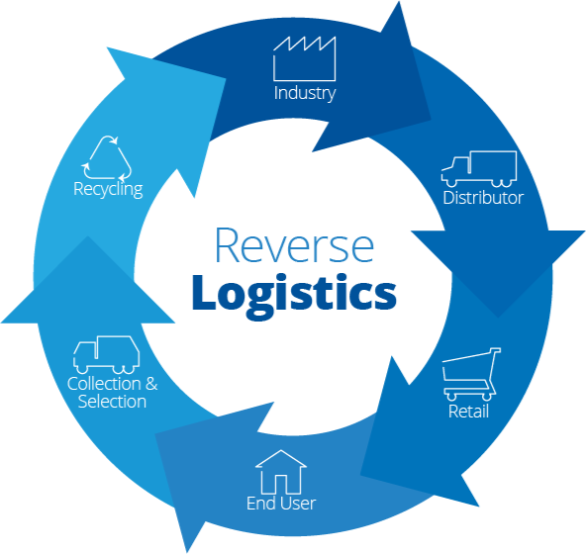
Reverse logistics refers to the movement of goods from the customer back to the manufacturer, supplier, or distribution centre. This includes returns, repairs, recalls, recycling, repackaging, and proper disposal.

Reverse logistics plays a major role in customer satisfaction, quality control, cost recovery, and environmental responsibility.

1. Purpose of Reverse Logistics

Reverse logistics aims to:

  • Manage returns efficiently
  • Recover value from returned goods
  • Reduce waste
  • Ensure safe disposal of hazardous goods
  • Improve customer trust and service
  • Support sustainability goals

A well-managed reverse logistics system reduces costs and strengthens the brand.

2. Types of Returns

Returns fall into several categories:

2.1 Customer Returns

Due to incorrect products, damages, defects, or dissatisfaction.

2.2 Warranty Returns

Products returned for repair or replacement under warranty.

2.3 Recall Returns

Products recalled due to safety or quality issues.

2.4 End-of-Life Returns

Products returned for recycling or disposal.

2.5 Commercial Returns

Unsold retail stock returned to suppliers.

Understanding the reason for return determines how it should be processed.

3. The Reverse Logistics Process

The returns cycle includes:

3.1 Return Authorisation

Customer requests approval to return a product (e.g., RMA number).

3.2 Collection or Customer Drop-Off

Product is collected or delivered to a return point.

3.3 Receiving & Inspection

Goods are inspected to determine their condition.

3.4 Sorting & Disposition

Returned goods are classified as:

  • Resellable
  • Repairable
  • Refurbishable
  • Recyclable
  • Return to supplier
  • Waste

3.5 Processing

Actions include repairs, repackaging, refurbishing, or scrapping.

3.6 Reintroduction to Inventory or Disposal

Goods that can be resold are added back into stock; unusable goods are disposed of.

4. Reasons for Returns & Impact on the Supply Chain

Common reasons:

  • Wrong product shipped
  • Damaged in transit
  • Poor product quality
  • Incorrect size/specification
  • Customer changed their mind
  • Expired stock

Impact on supply chain:

  • Increased costs
  • Inventory imbalances
  • Additional handling
  • Customer dissatisfaction
  • Waste generation

5. Value Recovery Options

Reverse logistics focuses on recovering value whenever possible:

  • Refurbishing
  • Repairing
  • Reselling
  • Recycling materials
  • Spare parts recovery

This supports circular economy principles.

6. Reverse Logistics Documentation

Key documents:

  • Return Authorisation (RMA)
  • Return Note
  • Inspection Report
  • Repair/Service Report
  • Disposal Certificate

These ensure accurate tracking and compliance.

7. Risks in Reverse Logistics

Risks include:

  • Fraudulent returns
  • Incorrect inspection
  • Health and safety issues (hazardous goods)
  • Environmental non-compliance
  • High processing costs

Risk control measures:

  • Clear return policies
  • Quality checks
  • Secure handling
  • Documentation accuracy
  • Staff training

8. Technology in Reverse Logistics

Technology improves visibility and speed:

  • Barcode and RFID tracking
  • Online returns portals
  • Automated return authorisation systems
  • Repair tracking systems
  • Recycling and waste management software

9. Environmental & Compliance Requirements

Reverse logistics must comply with:

  • Waste disposal regulations
  • Hazardous goods handling
  • Packaging recycling requirements
  • Environmental sustainability standards

This supports legal compliance and corporate responsibility.

🎯 Lesson Outcomes

By the end of this lesson, learners will be able to:

  1. Define reverse logistics and explain its purpose.
  2. Describe types of returns and reasons for return.
  3. Outline the reverse logistics process.
  4. Evaluate value recovery options.
  5. Understand documentation requirements.
  6. Identify risks and mitigation methods.
  7. Explain technology used in reverse logistics.
  8. Apply reverse logistics principles to real workplace scenarios.
Scroll to Top