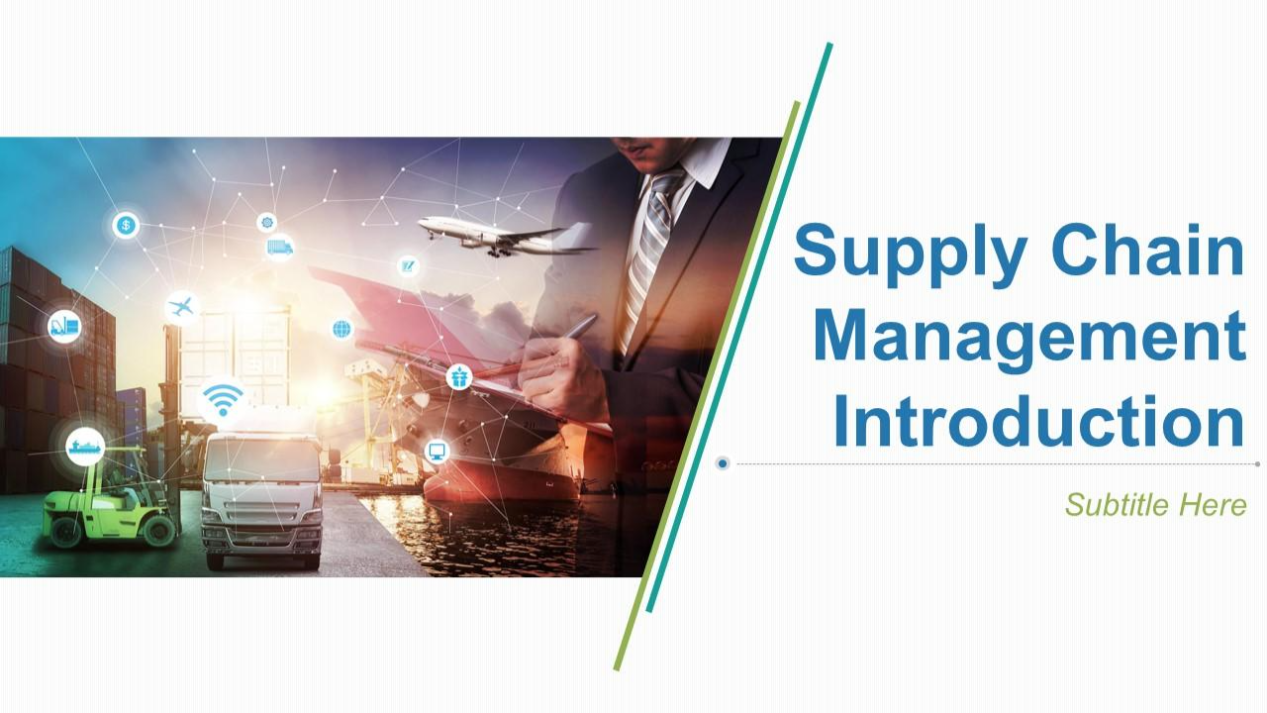
Lesson 1: Understanding the Supply Chain (KM-01)
This lesson introduces the fundamental concepts that make up a modern supply chain. It provides the context learners need to understand how goods and services move from suppliers to end customers.
⭐ 1. Introduction to Supply Chain Management
Supply Chain Management (SCM) refers to the planning, coordination, and oversight of all activities involved in sourcing raw materials, producing goods or services, and delivering finished products to end customers.
It integrates processes across:
- Procurement
- Production
- Warehousing
- Inventory control
- Transportation
- Customer fulfilment
SCM aims to optimise time, cost, quality, and service levels across the entire value chain.
It ensures every stakeholder supplier, manufacturer, retailer, logistics provider, and customer is interconnected through coordinated processes and shared information.
⭐ 2. Components of the Supply Chain
A supply chain typically includes the following components:
2.1 Suppliers
Suppliers provide raw materials, components, or services. Their reliability affects production schedules, inventory levels, and customer service outcomes.
2.2 Manufacturers / Producers
Manufacturers convert raw materials into finished goods through production processes such as:
- Assembly
- Packaging
- Processing
- Quality control
They must balance cost-efficiency with production speed and quality.
2.3 Warehousing & Distribution Centres
Warehouses store goods until needed for production or sale.
Distribution centres move products quickly through cross-docking or break-bulk processes.
Key warehouse functions include:
- Receiving
- Put-away
- Picking
- Packing
- Dispatch
- Stock rotation (FIFO / LIFO)
- Cycle counting
2.4 Transportation Providers
Transport connects every stage of the supply chain. Modes include:
- Road
- Rail
- Air
- Sea
Choice depends on speed, cost, cargo type, and distance.
2.5 Retailers / Customers
Retailers act as intermediaries between producers and end users.
Customer demand drives the entire supply chain. Demand patterns influence:
- Production planning
- Inventory levels
- Transport scheduling
- Supplier ordering
⭐ 3. Key Flows in the Supply Chain
Every supply chain relies on three essential flows:
3.1 Material Flow
Movement of:
- Raw materials
- Work-in-progress goods
- Finished products
From suppliers → manufacturers → warehouses → consumers.
3.2 Information Flow
Includes:
- Forecasts
- Sales data
- Inventory levels
- Production plans
- Transport schedules
- Customer orders
Accurate and timely information allows efficient coordination.
3.3 Financial Flow
Covers:
- Payments
- Credits
- Debits
- Pricing agreements
- Supplier terms
- Customer invoicing
These flows must be synchronized to maintain cashflow and operational stability.
⭐ 4. Supply Chain Processes
According to industry and QCTO standards, core supply chain processes include:
4.1 Procurement
Identifying needs, sourcing materials, negotiating, contracting, supplier evaluation.
4.2 Production / Operations
Transforming inputs into finished outputs using scheduling, capacity planning, and quality systems.
4.3 Warehousing
Managing inventory storage, movement, and control.
4.4 Inventory Management
Ensuring optimal stock levels through:
- Demand forecasting
- Replenishment rules
- Stock rotation
- Safety stock calculations
- Inventory valuation
4.5 Transportation & Distribution
Planning and managing movement of goods to achieve customer service objectives.
4.6 Customer Service
Handling customer orders, returns, complaints, and after-sales support.
⭐ 5. Importance of Supply Chain Management
Effective SCM:
- Reduces operational costs
- Improves product availability
- Reduces delays and bottlenecks
- Enhances customer satisfaction
- Supports competitiveness
- Enables rapid response to market changes
- Reduces waste and inefficiency
Poor SCM results in:
- Stockouts
- Excess inventory
- Customer dissatisfaction
- High logistics costs
- Missed production deadlines
- Supplier conflicts
⭐ 6. Supply Chain Integration
Integration refers to aligning processes across different departments and partners.
6.1 Internal Integration
Connecting procurement, production, warehousing, and distribution through shared systems and communication.
6.2 External Integration
Coordinating with suppliers, transport companies, distributors, and customers.
Tools that support integration:
- ERP systems
- Supply chain management software
- Real-time tracking
- Supplier portals
- EDI (Electronic Data Interchange)
- Forecast collaboration
⭐ 7. SCOR Model (Supply Chain Operations Reference)
(Included because QCTO loves global standards)
The SCOR model divides supply chain activities into:
- Plan
- Source
- Make
- Deliver
- Return
This model provides a framework for:
- Measuring performance
- Standardising processes
- Improving operational efficiency
⭐ 8. Supply Chain Risks
Common risks include:
- Supplier failure
- Transport delays
- Warehouse damage
- Incorrect forecasting
- Stock shortages
- Overproduction
- Quality issues
- Currency fluctuations
Managing these risks requires proactive planning, monitoring, and contingency strategies.
🎯 Lesson Outcomes (Professional Version)
By the end of this lesson, learners will be able to:
- Explain the concept and purpose of supply chains.
- Identify and describe the major components and stakeholders of a supply chain.
- Analyse the three core flows (material, information, financial).
- Define major supply chain processes and how they interrelate.
- Interpret the importance of supply chain integration.
- Recognise common risks and challenges in supply chain operations.
- Apply theoretical understanding to real-world supply chain scenarios.